
Introduction
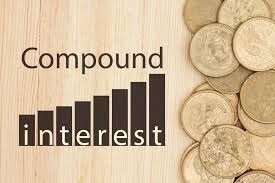
( What is Compund Interest ) If you’re trying to understand how money grows over time, compound interest is the most important concept you’ll ever learn in finance. It is often called the “8th wonder of the world” because it allows your money to multiply on its own—slowly at first, and then explosively.
Whether you are saving, investing, or planning for retirement, knowing what compound interest is can completely change how you manage money.
1. What Is Compound Interest?
Compound interest is the interest you earn on your initial money (principal) plus the interest you’ve already earned.
It’s interest on interest.
This means:
Your savings grow faster
Your investment returns multiply
Your wealth accelerates over time
So instead of earning interest only on what you deposited, you earn interest on the new balance every year, month, or even day.
This continuous growth creates the “compounding effect.”
2. How Does Compound Interest Work?
The logic is simple:
You deposit money
You earn interest
That interest is added to your balance
Next period, interest is calculated on the new, bigger amount
This cycle continues automatically
The more frequently your money compounds, the faster it grows:
Annually
Quarterly
Monthly
Daily
3. Compound Interest Formula
The standard formula is:
A=P(1+rn)ntA = P \left(1 + \frac{r}{n}\right)^{nt}A=P(1+nr)nt
Where:
A = Final amount
P = Principal amount
r = Annual interest rate
n = Number of compounding periods
t = Time in years
4. Simple Example of Compound Interest
Imagine you invest ₹10,000 at 10% annual interest, compounded yearly.
Year 1
Interest = ₹1,000
Total = ₹11,000
Year 2
Interest = 10% of ₹11,000 = ₹1,100
Total = ₹12,100
Year 3
Interest = 10% of ₹12,100 = ₹1,210
Total = ₹13,310
Without doing anything, your money keeps multiplying.
5. Compound Interest vs Simple Interest
| Feature | Simple Interest | Compound Interest |
|---|---|---|
| Interest earned on | Principal only | Principal + interest |
| Returns | Slow | Faster |
| Best for | Short-term loans | Long-term savings & investments |
6. Why Compound Interest Is Powerful
1. Money Grows Faster Automatically
You don’t need to add more; your interest keeps increasing your balance.
2. Helps Beat Inflation
Your returns grow faster than the increasing cost of living.
3. Works Best in Long-Term Investing
The longer your money stays invested, the bigger the compounding impact.
7. Real-Life Uses of Compound Interest in India
1. Mutual Funds (SIP)
SIPs are the most popular compounding method.
Small monthly amounts → huge returns over years.
Internal Link:
Plan your investments using our <a href=”/sip-calculator”>SIP Calculator</a>.
2. Bank Fixed Deposits (FDs)
FDs compound quarterly or monthly depending on banks.
3. PPF (Public Provident Fund)
One of the strongest long-term compounding tools with 15-year maturity.
4. NPS & Retirement Funds
Compounding over 20–30 years can create crores.
5. Savings Accounts
Interest compounds monthly in most Indian banks.
8. Tips to Maximize Compound Interest
1. Start Early
The earlier you start, the more compounding works in your favour.
2. Stay Invested Longer
Time is the secret ingredient for compounding.
3. Increase Investments Gradually
Even adding ₹500 more per month increases long-term wealth massively.
4. Reinvest Earnings
Never withdraw interest; let it compound.
5. Choose High-Return Instruments
Equity mutual funds give the best long-term compounding (12–15%).
9. Common Mistakes to Avoid
❌ Withdrawing interest early
❌ Investing for short periods
❌ Chasing quick profits
❌ Not increasing SIP amounts yearly
❌ Ignoring inflation
Conclusion
Compound interest is the foundation of wealth-building.
It rewards patience, discipline, and long-term thinking. Whether you’re saving in PPF, investing in SIPs, or planning for retirement, the power of compounding can turn small amounts into a massive financial cushion over time.
The best time to start was yesterday.
The second best time is today.